
Thermostat Buying Checklist: 7 Things to Check (2026)

You are currently viewing Thermostat Buying Checklist: 7 Things to Check (2026)
Thermostat Buying Checklist: 7 Things to Check (2026) - thermostat, Product Comparisons

This article contains affiliate links. If you purchase through these links, we may earn a small commission at no extra cost to you.

Shopping for a smart thermostat can be confusing given the wide array of smart controllers, scheduling capabilities, and HVAC system constraints. Market prices span from around $80 to under $135, making it tricky to decide which features warrant extra spending.

This data-backed checklist cuts through the confusion by analyzing current market options. By evaluating core trade-offs in controller integration, display types, and system compatibility, you can confidently choose the ideal model for your home budget.

The Checklist

1
Verify HVAC equipment and system compatibility
Market options vary significantly in utility. Some thermostats strictly target furnaces or heat pumps, while versatile models around $85 support boilers, air conditioners, heat pumps, and furnaces simultaneously. Always verify your equipment type before buying.
2
Check smart home controller ecosystem support
Controller options range from broad compatibility across Alexa, Apple HomeKit, Google Assistant, SmartThings, and Vera to narrower configurations like Alexa and Ring. Ensure your preferred voice assistants and mobile platforms are supported out of the box.
3
Determine color touchscreen and interface preferences
Models priced around $125 to $135 emphasize customizable or selectable color touchscreens paired with smart response technology. Conversely, options under $85 prioritize standard remote or programmable interfaces, saving you money if display visuals matter less.
4
Look for Energy Star and savings features
Energy Star certification and energy-saving features appear across multiple price points, from budget units around $80 to premium options near $135. Look for helpful extras like filter change indicators to ensure long-term heating and cooling efficiency.
5
Evaluate temperature control and scheduling modes
Temperature control types range from basic heating and cooling adjustments to smart remote management and full 7-day programming options. Determine whether simple automated scheduling or full app-based smart control best fits your daily household routines.
6
Consider installation complexity and DIY features
Products frequently feature easy DIY installation or explicit wiring requirements like C-wire compatibility. Factor in set-up ease and self-installation features, especially when comparing entry-level models around $80 against higher-priced units above $120.
7
Balance unit pricing against rating trends
Top-rated models reaching 4.4★ are available around $85 with over 22,000 reviews, whereas models near $130 hold 4.2★ to 4.3★ across up to 29,000 reviews. Compare total feature sets against user rating trends to find optimal value.

Quick Picks: What the Data Favors Now

Score Product Price Rating Reviews 1★ Rate
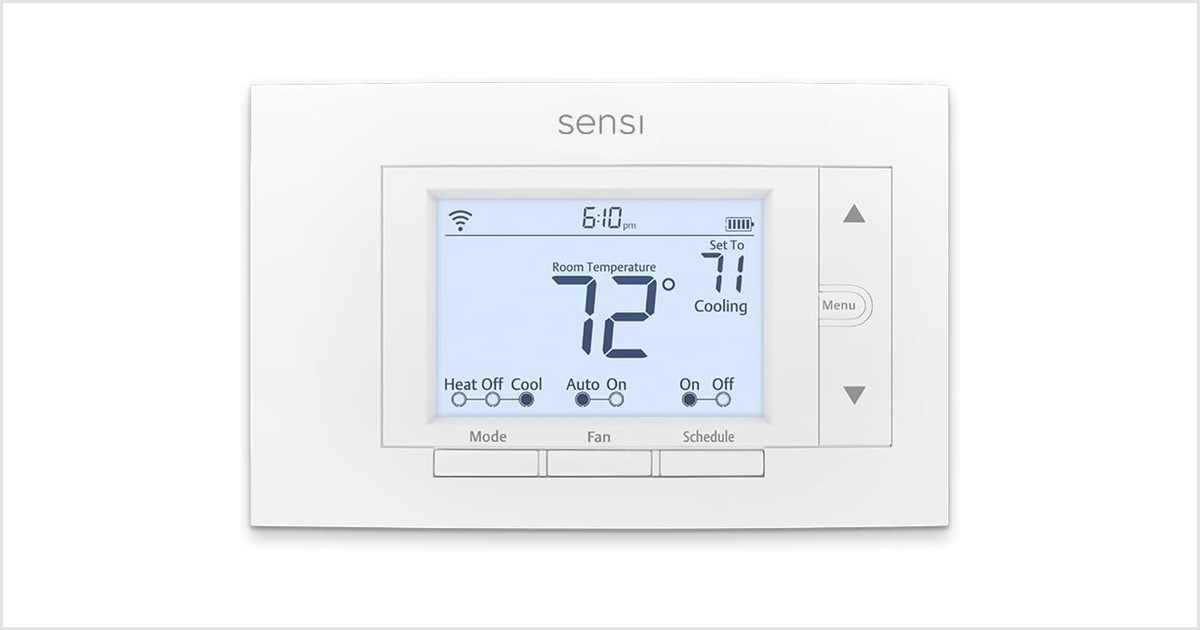
69 Sensi Smart Thermostat, Wi-Fi, DIY, Alexa, Energy Star Certified, ST55 $106.99 ★★★★☆ 4.4 22,951 8%
62 Honeywell Home RTH9600WF Smart Color Thermostat ENERGY STAR Wi-Fi P… $124.99 ★★★★☆ 4.3 19,909
61 Honeywell Home RTH9585WF Wi-Fi Smart Color Thermostat, 7 Day Progra… $129.89 ★★★★☆ 4.3 20,047 9%

Prices, ratings and review counts based on Amazon listing data as of August 14, 2026. Current prices may vary. The RecoRader Score combines verified ratings, review volume and price value — see how we rank.

Bottom Line

Before finalizing your purchase, weigh this checklist against your own kitchen and living space requirements, taking into account existing smart home ecosystems and heating systems. Current market data favors top-performing options around $85, which achieve the highest rating in the dataset (4.4★) alongside broad HVAC compatibility, multi-assistant controller support, and Energy Star certification. While models near $135 offer customizable color displays, budget to mid-tier devices deliver outstanding overall functionality and value.